
This article explains the role of an Objective Owner in the TRAIIN Operating Model. It is detailing their responsibilities in leading cross-departmental efforts to achieve organizational objectives, the essential skills required such as strategic thinking, communication, and stakeholder management as well as their participation in key meetings, and the common challenges they face balancing strategic and operational demands within transformational initiatives. It is the one role that will be introduced when working with the TRAIIN Operating Model.
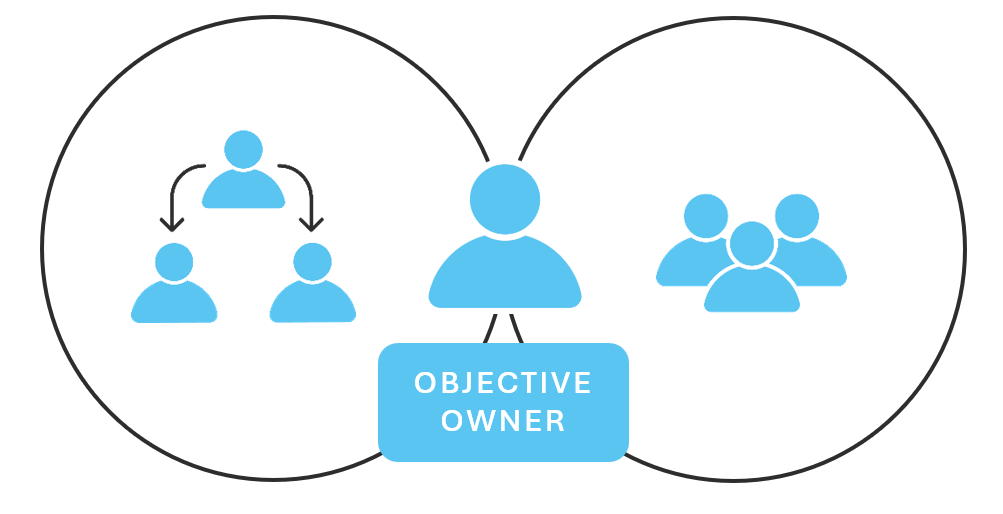
Previously we have gone into detail regarding the main artefacts that play a role in TRAIIN such as Objectives and Key Result. In this article we will focus on the main role within the TRAIIN Operating Model.
Introduction to the Objective Owner
An Objective Owner is a key person who leads and coordinates the efforts to achieve one or more specific objectives in the organization. He has the competence to act across departmental boundaries, and he is passionate about his objective and works closely with others, e.g. Project Managers of projects related to the objective. Objective Owners make sure that everyone is committed, aligned and on track to reach the goal. They also monitor and report the progress, identify and remove any obstacles, and communicate with the TRAIIN Steering Committee and other stakeholders of the transformation. They are proactive, collaborative and accountable for the success of their objectives. Therefore, an Objective Owner role requires a broad range of skills and experiences.
But before we dive into the skill set of an Objective Owner let us briefly have a look at the tasks and responsibilities that come with the role of an Objective Owner.
Tasks & Responsibilities
The role of an Objective Owner involves the following tasks:
- Securing the commitment and collaboration of all the parties involved in the objectives across departmental boundaries. This most probably will also include to align with projects connected to the success of an Objective.
- Monitoring and driving the progress of an Objective and the quality of the outcome of an Objective.
- Identifying and resolving any obstacles or issues that may hinder the outcome of an Objective.
- Reporting and communicating the status and trend of the Objectives to the Steering Committee and other stakeholders.
- Aligning and negotiating with other Objective Owners on the dependencies and resource needs of the Objectives to be delivered within the same timeframe.
- Escalating to the Steering Committee any risks or challenges that may jeopardize the timely delivery of the Objective and that cannot be solved by the Objective Owner herself or within the Refinement Meeting with other Objective Owners.
- Participating as a stakeholder in the meetings of the initiatives that are derived from the Objective. The Objective Owner is a participant in the corresponding Project Steering Committees or Programme Steering Committees.
An Objective Owner is a key role in ensuring the success and alignment of the Transformation and its Objectives. Due to the broad spectrum of tasks and responsibilities an Objective Owner needs to be experienced in communicating, negotiating and managing different types of stakeholders and roles within the transformation. Starting from project members and leaders to management. Let’s dive into the skill set for a moment.
Main Skill Set of an Objective Owner
- Strategic Execution and Thinking
An Objective Owner ensures alignment with the organisation’s transformation goals and manages dependencies among Objectives.
Example: Makes sure the objectives and key results contribute to long-term business outcomes, such as improving customer retention or operational efficiency or that objectives don’t provide contradictory outcomes. - Cross-Functional Leadership
An Objective Owner facilitates collaboration across departments and disciplines. She can also facilitate between departments and reduce misunderstandings and frictions.
Example: Coordinates between IT, HR, and Finance to implement a new digital onboarding process that supports the transformation objective and aligns relevant projects and their project leads. Understands the different languages and levels of understanding. - Accountability and Ownership
An Objective Owner serves as the single point of accountability for the objective.
Example: Takes charge of a transformation goal like “Reduce time-to-market by 20%” and is accountable for its delivery and reporting. - Monitoring and Analytical Skills
An Objective Owner tracks progress, identifies risks, and resolves issues proactively. If impediments endanger the outcome of an Objective she escalates tries to resolve with accompanying Objective Owners or escalates to Management and Stakeholders, e.g. Steering Committee.
Example: Uses dashboards to monitor key results and escalates delays in vendor integration to the Steering Committee. - Communication and Reporting
An Objective Owner maintains transparent communication with leadership and stakeholders mainly through the TRAIIN Map.
Example: Prepares monthly status updates and presents risk scenarios to the Steering Committee for timely decision-making. - Negotiation and Alignment Skills
An Objective Owner manages dependencies and resource conflicts across objectives.
Example: Negotiates with other Objective Owners to reallocate shared resources when two objectives compete for the same team. - Stakeholder Management
An Objective Owner builds trust and alignment with internal and external stakeholders.
Example: Engages with external consultants and internal teams to ensure buy-in for a new compliance framework. - Business Acumen and data driven mindset
An Objective Owner understands KPIs, market dynamics, and organisational priorities.
Example: Aligns the objective with quarterly financial targets and other relevant KPIs of the Objective. - Agility and Adaptability
An Objective Owner responds effectively to change and uncertainty.
Example: Shifts focus from a planned rollout to a pilot programme when budget constraints arise, without losing momentum.
Based on this set of skills the Objective Owner has the following tasks and responsibilities.
Meetings and Interactions
As Objective Owners play a central role in the governance and execution of transformation initiatives, they initiate and participate in TRAIIN Steering Committee meetings, where they report on the status, risks, and support needs of their objectives, ensuring alignment with the organisation’s strategic direction or in case of escalations they cannot resolve alone or with other Objective Owners in the Refinement Meeting. In Refinement Meetings, Objective Owners track progress against Key Results, resolve impediments, and escalate unresolved risks. They resolve resource issues among projects, initiatives and other Objectives. They also engage in the Refinement Meetings as cross-objective alignment sessions, collaborating with other Objective Owners to negotiate dependencies, resource allocation, and priorities.
When new initiatives are launched or reviewed – especially those derived from their objectives – Objective Owners join kick-off and review sessions as key stakeholders to maintain continuity and clarity. During the preparation phase, Objective Owners may take part in focus interviews to help define the objective’s scope, understand current KPIs, and identify transformation dependencies. These meetings collectively ensure that Objective Owners remain deeply embedded in both strategic planning and operational execution.
Objective Owner in Practice
In practice, Objective Owners often encounter a range of challenges that come from the complexity of their role within transformational initiatives. One common issue is the tension between strategic responsibility and operational execution—while Objective Owners are tasked with driving high-level transformation goals, they may also be pulled into day-to-day project management, creating conflicting priorities. This is especially pronounced when individuals hold dual roles, such as serving simultaneously as Project Sponsor and Objective Owner, which can blur boundaries and dilute focus.
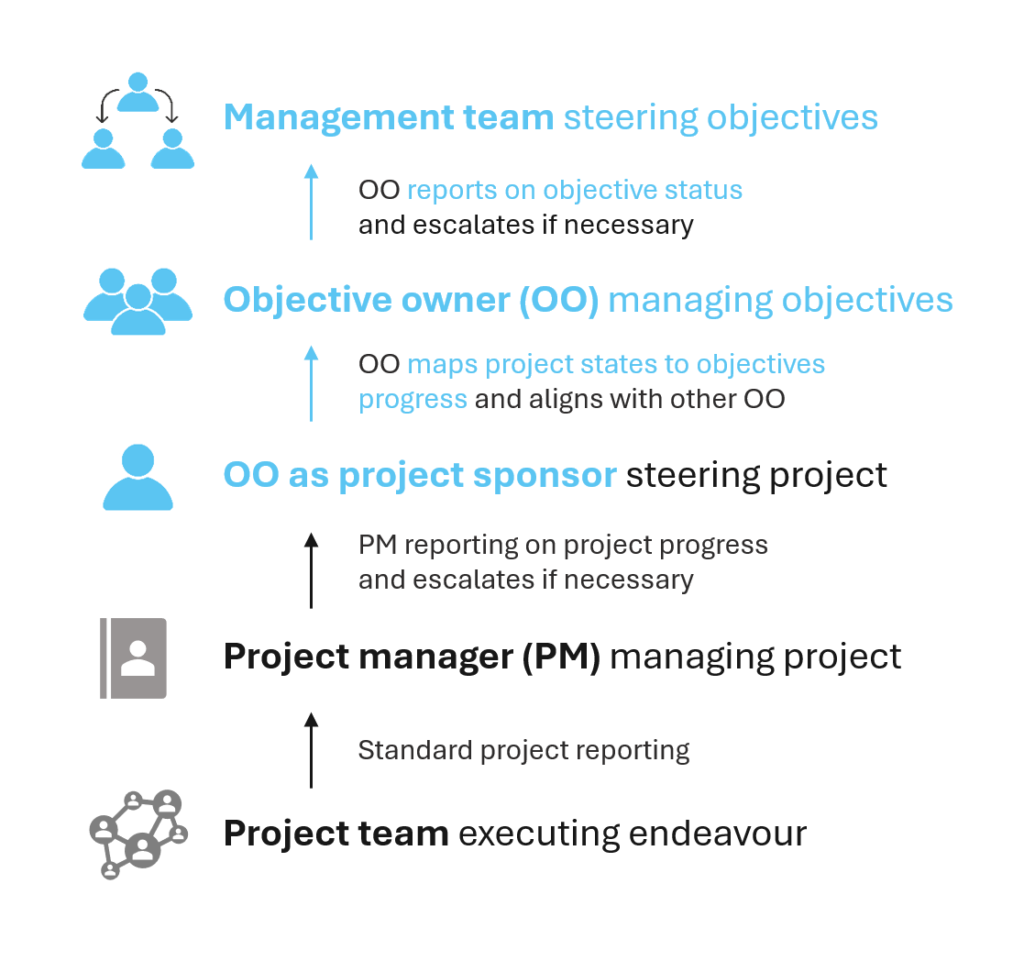
Additionally, the absence of clearly defined escalation structures can hinder timely resolution of critical issues. Without formalised pathways for raising concerns or requesting support, Objective Owners may struggle to secure the necessary backing from leadership, risking delays and misalignment in the transformation process.
Conclusion
The Objective Owner is crucial in driving organisational transformation, acting as the single point of accountability for key objectives. Success in this role demands a transformational mindset, strategic thinking, cross-functional leadership, and strong stakeholder management. Objective Owners must balance strategic vision with operational execution, quickly identify risks and impediments to resolve them, and maintain transparent communication with all parties. The role often involves navigating complex priorities and requires clear escalation pathways to ensure timely support and alignment with organisational goals.
