
Part of the Spotlight on TRAIIN series.
Successful transformations require an agile mindset
Transformations are inherently complex. External factors like macro-economic shifts, competitive dynamics, and emerging technology trends continuously influence organizations. As the world grows more volatile and less predictable, the ability to adapt becomes more critical than ever. To succeed, strategies must remain flexible and responsive to change.
An agile mindset is key. It enables organizations to take deliberate detours when necessary while maintaining a clear focus on the overall transformation vision.
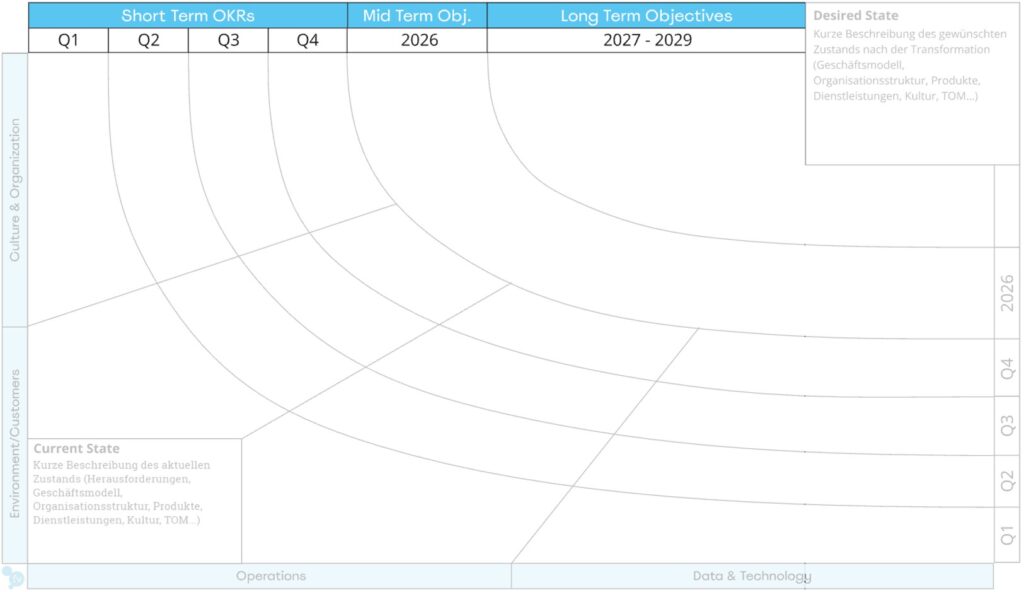
Non-linear timeline: Balancing short-term focus with long-term flexibility
An agile approach to strategy should provide the flexibility needed to adjust course without compromising key priorities. In this context, the TRAIIN Operating Model encourages organizations to:
- Commit firmly to short-term OKRs (quarterly objectives and key results, see Spotlight on: Objectives) that drive immediate progress in the TRAIIN Impact Dimensions (see Spotlight on: Categories)
- Selective focus objectives in the upcoming year on 1 – 3 key objectives, intentionally creating space for strategic prioritization
- Long-term objectives spanning a 3-year window, designed to connect all initiatives to the transformation vision while allowing for adaptability in execution
The transformation vision remains constant. However, the degree of certainty in planning decreases as the time horizon extends. Mid- and long-term objectives should not include rigid key results. Instead, they should serve as connections linking today’s initiatives with tomorrow’s goals.
Pitfalls
- Over-specifying long-term objectives by including rigid key results too early. These objectives should remain flexible connectors, not detailed commitments
- Overloading the mid- and long-term sections with too many granular items, overwhelming teams and reducing agility
Conclusion
The TRAIIN Map’s non-linear timeline helps transformation leaders cultivate an agile mindset toward strategy execution. This shift in thinking is essential for successfully operationalizing change and achieving meaningful transformation outcomes.
